
Let’s face it—reading about how a hydraulic cylinder works is one thing, but actually *seeing* it in motion? That’s a whole different experience. If you’ve ever tried to explain hydraulics to a new technician, or if you’ve just been curious yourself, chances are the words “hydraulic cylinder working animation” ended up in your search bar. And for good reason. Animations make the invisible visible, and when it comes to high-pressure systems, that clarity matters.
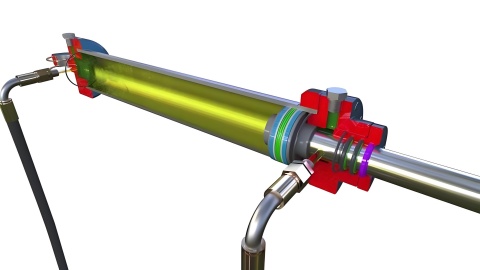
Why Animation Helps You Understand Hydraulic Cylinders Faster
Hydraulic systems can be deceptively simple on the outside, but what happens inside the cylinder is harder to visualize—especially when it’s sealed and filled with fluid. That’s where a working animation helps.
Instead of trying to imagine what happens when fluid flows into the chamber, you can actually see it. Animations show how the piston moves, where the hydraulic oil travels, and how the seals, rods, and barrels interact. For people who are more visual learners—or just new to hydraulic systems—it’s a shortcut to true understanding.
Without animation, a lot of people assume hydraulic cylinders are just “metal tubes that push stuff.” That kind of thinking leads to mistakes in operation, repair, and troubleshooting.
Basic Working Principle of a Hydraulic Cylinder (Before You Watch)
Before diving into an animation, it’s good to have a general idea of how things work. A hydraulic cylinder converts hydraulic energy (fluid pressure) into mechanical energy (linear motion). This is done through several components working together:
- Barrel: The main body of the cylinder
- Piston: Moves inside the barrel and separates the pressure zones
- Piston rod: Attached to the piston and extends out of the cylinder to do work
- Hydraulic fluid: Usually oil, which is pressurized to move the piston
When pressurized fluid is pumped into one side of the cylinder, it pushes the piston, which pushes the rod outward. Reversing the flow retracts it. That’s the basic cycle you’ll see in almost every hydraulic cylinder working animation.
What You’ll See in a Good Hydraulic Cylinder Working Animation
A well-made animation breaks down the process in a way that even someone completely new to hydraulics can follow. Here’s what to expect from a quality video or interactive model:
- Clear cutaway views that show the interior of the cylinder
- Flow lines showing how fluid moves in and out
- Color-coded or labeled parts like pistons, rods, seals, and ports
- Slow-motion or step-by-step actions (extension and retraction)
- Optional: pressure simulations or animated failure scenarios
These animations are not just for school or training—many professional technicians use them for brushing up on theory or even helping customers understand how repairs work.
Real-World Examples: Where These Animations Make a Difference
If you run a repair shop or maintain a fleet of hydraulic equipment, you’ve probably seen firsthand how confusing hydraulic talk can get. Now imagine handing a new hire an animation instead of a technical manual. In two minutes, they’ll grasp more than an hour of talking would do.
Or let’s say you’re on-site trying to figure out why a cylinder isn’t extending fully. Pull up a working animation on your phone, compare it to what you’re seeing, and boom—you spot the missing pressure on the return stroke. It’s an effective learning and troubleshooting tool in real scenarios.
How to Choose a Good Hydraulic Animation (Not All Are Created Equal)
Not every animation is useful. Some are too fast, too vague, or missing labels. When choosing a good hydraulic cylinder working animation, here are a few things to check:
- Does it clearly show fluid paths during both extension and retraction?
- Are the internal components labeled?
- Is the animation speed adjustable or easy to pause?
- Is it based on real-world cylinders or just theoretical models?
Free resources like YouTube are a great place to start. Search for terms like “hydraulic cylinder cutaway animation” or “double-acting cylinder animation.” For professional or training use, consider paid platforms like Autodesk, Parker Hannifin training modules, or hydraulic system simulation software that includes interactive components.
Summary: Don’t Just Read It—Watch It
Hydraulic systems do powerful work, but they do it quietly and invisibly. That’s why hydraulic cylinder working animations are so useful. They help you actually see what’s going on inside—how the fluid flows, how pressure builds, and how motion is created. Whether you’re training a new tech, explaining something to a client, or just learning for yourself, animation makes it all click.
Next time you run into a tricky hydraulic issue or just want to brush up on the basics, look up a few working animations. You’ll not only understand better—you’ll also remember it longer. And that’s the kind of knowledge that pays off in the field, in the shop, and on the job.
It is recommended to use various types of hydraulic cylinders, dump truck hydraulic cylinders, and top hydraulic cylinders of our company

 Whatsapp


