
When you think about hydraulic cylinders, your mind probably jumps to the big stuff—like the barrel, seals, or piston rod. But there’s one component that often goes unnoticed until it fails: the hydraulic cylinder pin. It may look like a simple steel rod, but its role is anything but minor. When a pin fails, the entire machine can come to a grinding halt.
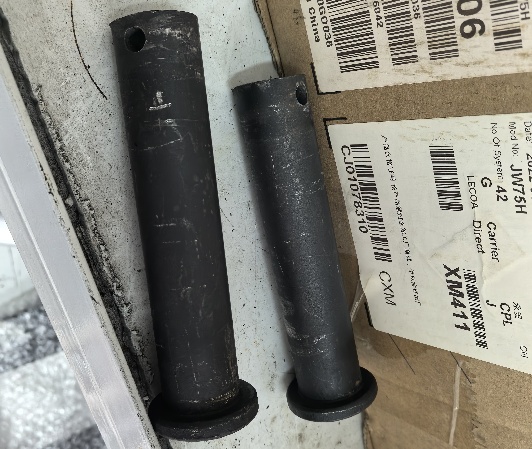
What Are Hydraulic Cylinder Pins?
Hydraulic cylinder pins are the connection points between the cylinder and the machine frame or linkage. These pins allow the cylinder to pivot during extension and retraction, making them essential for proper alignment and mechanical efficiency. Despite their simple appearance, they are precision components that take on immense force in every cycle.
Basic Function in the Hydraulic System
Think of the pins as joints in a human arm. Without them, the whole limb wouldn’t move correctly. Similarly, these pins serve as rotation points that allow for controlled movement between connected structures. They ensure that motion from the hydraulic cylinder is transferred smoothly to the equipment, whether it’s a loader arm, dump bed, or excavator boom.
Types of Pins
- Clevis Pins – Typically used in clevis mount cylinders, secured with cotter pins or R-clips.
- Retaining Pins – Feature grooves and clips that prevent axial movement.
- Greaseable Pins – Have built-in grease fittings for regular lubrication, increasing lifespan.
Why Cylinder Pins Matter More Than You Think
Too often, pins are treated as afterthoughts. But when they wear out, the consequences can be serious—damaged bores, misalignment, noisy operations, or worse: complete failure.
Load-Bearing and Alignment
Hydraulic pins are under constant shear and bending loads. If the pin isn’t strong enough or properly aligned, the load won’t distribute evenly. Over time, this leads to excessive wear not just on the pin, but also on the cylinder eye or machine mount.
The Role of Pin Wear in Machinery Downtime
Many operators ignore early warning signs: clicking sounds during movement, uneven bucket tilt, or small metal flakes near the joint. These are classic signs of pin wear. If left unchecked, worn pins can elongate the cylinder eye or bracket hole—turning a $20 part replacement into a $2,000 rebuild job.
Common Problems With Hydraulic Cylinder Pins
Wear and Oval Holes
This is the most common issue. Over time, vibration and friction wear the round hole into an oval, making the pin loose and unstable. It affects accuracy, load handling, and safety.
Pin Seizure and Rusting
In environments with mud, salt, or moisture, pins can rust in place. If there’s no grease fitting, or if it’s ignored, the pin may seize and require cutting or hammering out. This adds time and costs to basic maintenance.
Improper Fit and Loosening
A pin that’s too short or has too much clearance can wiggle during operation, leading to rapid wear. Always measure and match the pin diameter and length precisely.
How to Choose the Right Hydraulic Cylinder Pins
Not all pins are created equal. Buying the wrong pin may seem cheaper upfront, but it could cost more in long-term damage.
Material Matters
Hardened steel is common for most heavy-duty applications because of its strength and wear resistance. For marine or corrosive environments, stainless steel is a better option despite the higher cost.
Size Tolerance and Fit
Always check the manufacturer’s specifications. Even a 0.5 mm difference can cause either seizure or wobble. Precision-machined pins are worth the extra cost for high-usage equipment.
Grease Fittings and Maintenance Access
Some pins come with built-in grease zerks, allowing you to lubricate without removing them. If you can’t grease the pin regularly, you’re essentially shortening its life every time you use the machine.
Real-Life Use Case: When a Pin Causes a $5,000 Breakdown
A small construction company once had a loader arm fail on-site. The cylinder eye cracked under load, and the team assumed it was a manufacturing defect. Turns out, the pin had been replaced with an undersized hardware-store bolt “just to get through the day.” That temporary fix caused constant vibration and ovalized the mounting hole. After the failure, they had to weld, machine, and refit the entire assembly. All told, the job cost over $5,000—and the jobsite was down for three days.
The lesson? Even a $15 pin deserves proper attention.
Conclusion: Don’t Overlook the Small Parts
Hydraulic cylinder pins may be small, but their role is huge. They’re not just pieces of metal—they’re precision components that ensure the smooth, safe, and efficient operation of your machinery. Whether you’re running an excavator, dump truck, or agricultural sprayer, checking your pins should be part of your regular maintenance checklist.
When replacing hydraulic cylinder pins, always go for quality, match the specs exactly, and don’t forget to grease. Because when it comes to hydraulics, it’s often the little things that keep the big machines moving.
It is recommended to use various types of hydraulic cylinders, dump truck hydraulic cylinders, and top hydraulic cylinders of our company

 Whatsapp


